Ageing and Wrinkles
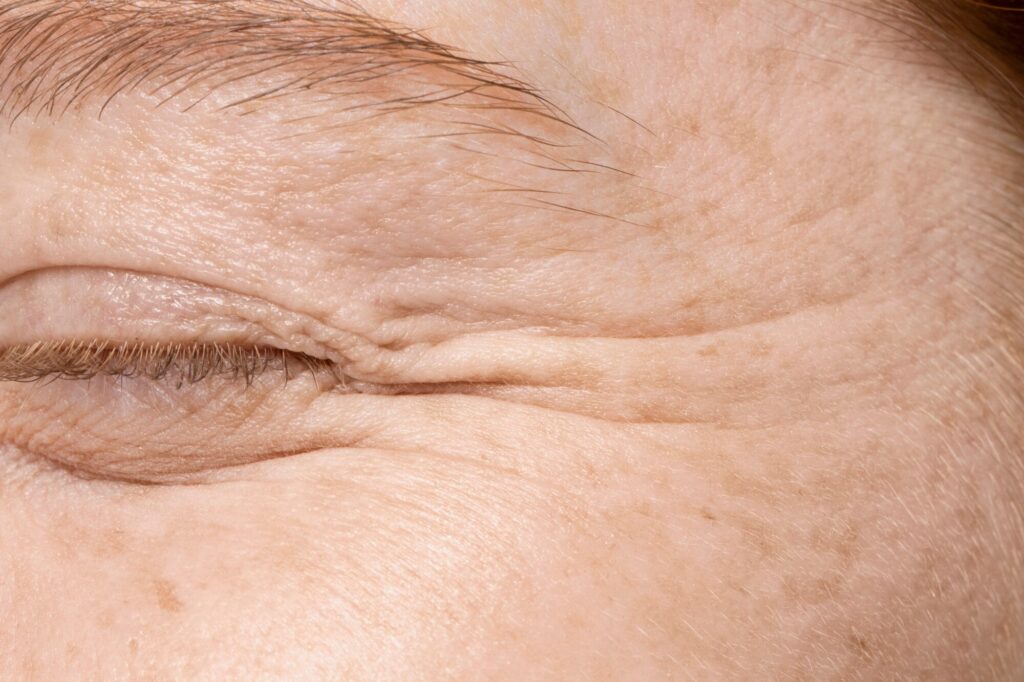
Skin ageing is a natural, inevitable biological process in which the structure and function of the skin gradually deteriorate over time. This process affects all layers of the skin, leading to visible changes such as loss of firmness, reduced elasticity, uneven texture, and the formation of fine lines and deeper wrinkles.
While ageing affects the entire body, the skin – as our most visible organ – often shows the earliest and most noticeable signs. Wrinkles are among the most recognised features of skin ageing, typically appearing first around the eyes, mouth, and forehead. They result from a combination of intrinsic (natural) ageing and extrinsic (external) factors.
CAUSE:
- Intrinsic ageing (natural ageing process governed by genetics)
- Reduced collagen production, leading to loss of firmness and structure
- Breakdown of elastin fibres, causing loss of elasticity and sagging
- Slower cell turnover, resulting in duller, rougher skin texture
- Decreased hyaluronic acid levels, reducing hydration and plumpness
- Sun exposure (photoageing) - UV radiation accelerates skin ageing and leads to wrinkles, pigmentation, and leathery texture
- Pollution and environmental toxins, which increase oxidative stress and damage skin cells
- Smoking, which restricts blood flow and breaks down collagen and elastin
- Poor diet and lack of hydration, impairing skin repair and regeneration
- Repeated facial expressions, such as frowning or squinting, which over time lead to expression lines
- Sleep deprivation and chronic stress, which disrupt skin renewal and increase inflammation
- Menopause and hormonal decline, which reduce skin thickness and hydration
SYMPTOMS:
- Fine lines, especially around the eyes (crow’s feet), mouth, and forehead
- Deeper wrinkles, including frown lines and nasolabial folds
- Sagging skin, particularly along the jawline, cheeks, and neck
- Thinning of the skin, making it appear fragile and more transparent
- Loss of facial volume, leading to a hollow or sunken appearance
- Dryness and rough texture, due to reduced oil production
- Uneven skin tone, with areas of pigmentation or age spots
- Dull complexion, lacking natural radiance
- Increased visibility of pores, particularly on the nose and cheeks
- Less responsive skin, with reduced bounce and firmness when touched