- Understanding how skin ages
- The role of prevention in the twenties
- Transitioning in the thirties
- The forties, addressing established signs
- The fifties and beyond, comprehensive rejuvenation
- Factors that influence the right time to start
- The importance of consistency and maintenance
- Psychological aspects, confidence and wellbeing
- Finding the right moment
Ageing is a natural and inevitable process, yet how it manifests on the skin varies greatly between individuals. Genetics, lifestyle habits, diet, stress and environmental exposure all influence when fine lines, loss of elasticity and uneven skin tone begin to appear. In the past, anti-ageing treatments were often associated with more mature skin, typically beginning in one’s forties or fifties. Today, however, the approach has shifted significantly. Preventive strategies and early interventions have become just as important as corrective measures. This change raises a common question: when is the right time to start anti-ageing treatments?
The answer is not a single number but rather a combination of individual circumstances, skin condition and goals. By examining the signs of skin ageing and the types of treatments available at different life stages, one can make informed decisions that support healthy, youthful skin for the long term.
Understanding how skin ages
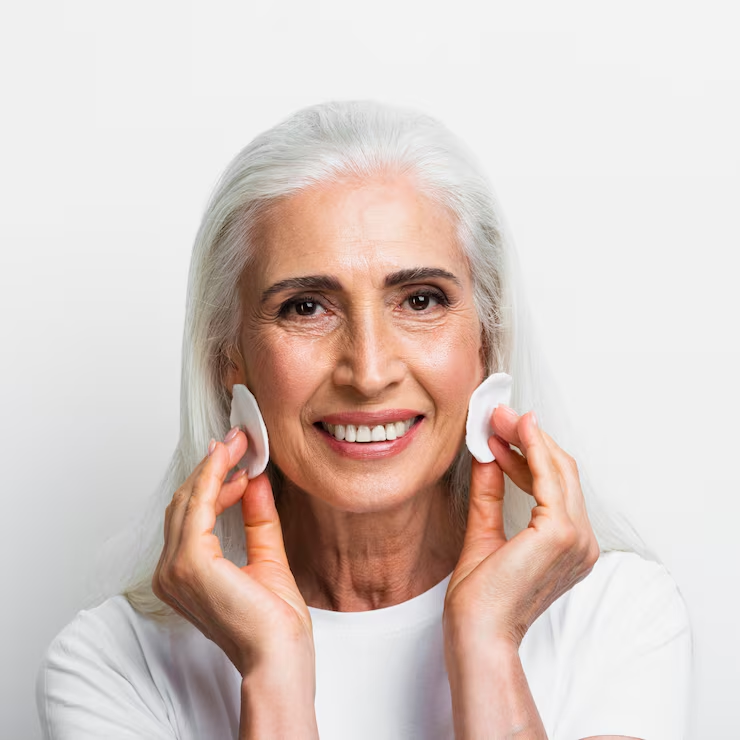
Skin ageing is driven by both intrinsic and extrinsic factors. Intrinsic ageing, also known as chronological ageing, is determined largely by genetics and the natural decline of collagen and elastin production with time. This leads to thinner skin, dryness and reduced elasticity. Extrinsic ageing, on the other hand, is caused by environmental factors such as sun exposure, pollution, smoking and diet. Among these, ultraviolet radiation is the most significant, accounting for up to 80 per cent of visible skin ageing.
The first visible signs often include fine lines around the eyes, changes in texture and a loss of radiance. Later, deeper wrinkles, sagging and uneven pigmentation become more prominent. Knowing these stages helps determine when preventive care should transition into active treatment.
The role of prevention in the twenties
For many, the twenties are characterised by resilient, radiant skin with minimal visible ageing. However, this is also the decade when preventive measures should begin. While professional anti-ageing treatments may not be necessary for most at this stage, building consistent habits is crucial. Sun protection remains the most effective anti-ageing step, as cumulative UV exposure is the leading cause of premature wrinkles and pigmentation.
Some individuals may also benefit from starting mild treatments such as antioxidant serums, gentle chemical peels or occasional facials. These not only maintain skin health but also establish a routine of proactive care. For those with genetic predispositions or lifestyle factors that accelerate ageing, consulting a professional early can help design a tailored plan that prevents premature damage.
Transitioning in the thirties
The thirties are often when the first subtle signs of ageing become noticeable. Fine lines around the eyes and mouth may appear, and some individuals report a loss of firmness in the cheeks or jawline. At this stage, preventive care remains vital, but early interventions can also make a significant difference.
Treatments such as microneedling, light chemical peels and non-ablative laser therapies can stimulate collagen production and maintain skin elasticity. For dynamic wrinkles caused by repetitive facial movements, small doses of botulinum toxin may be introduced as a preventive measure, reducing the risk of these lines becoming etched into the skin. Hyaluronic acid-based dermal fillers may also be considered to restore volume in areas where it begins to decline.
The emphasis in this decade is on subtlety. The goal is not dramatic transformation but maintaining youthful skin for longer by addressing changes as they arise.
The forties, addressing established signs
By the forties, intrinsic ageing is more evident. Skin may appear thinner, and collagen levels have decreased significantly compared to earlier decades. Wrinkles become more pronounced, pigmentation issues such as sun spots may develop, and elasticity is reduced. At this stage, more advanced anti-ageing treatments often become appropriate.
Laser resurfacing treatments can address uneven texture and pigmentation, while stronger chemical peels provide rejuvenation by stimulating cell turnover. Radiofrequency and ultrasound-based therapies are popular non-surgical options for tightening the skin and improving definition in the jawline and neck.
For many, dermal fillers and botulinum toxin treatments are refined to address both volume loss and dynamic wrinkles. Rather than prevention, the focus becomes correction and restoration, with treatments tailored to individual needs and desired outcomes.
The fifties and beyond, comprehensive rejuvenation
In the fifties and later, skin changes become more advanced, with deeper wrinkles, sagging and significant volume loss. Hormonal changes, particularly in women post-menopause, can accelerate thinning of the skin and dryness. At this stage, comprehensive rejuvenation strategies are often recommended.
Combination therapies are particularly effective, such as pairing laser resurfacing with injectable treatments, or combining dermal fillers with skin-tightening technologies. These multi-layered approaches address different aspects of ageing simultaneously, offering natural yet noticeable results.
For individuals seeking more dramatic changes, surgical options such as facelifts or eyelid surgery may be considered, but non-surgical treatments continue to provide excellent results for those preferring less invasive approaches. The goal in this phase is to restore vitality and support the skin’s structure while maintaining a natural appearance.
Factors that influence the right time to start
While age offers a general framework, the decision to start anti-ageing treatments should ultimately be guided by individual factors. Genetics play a major role, with some individuals showing signs of ageing earlier than others. Lifestyle habits such as smoking, diet, stress and sleep also have significant impact, often accelerating the need for intervention.
Skin type and tone further influence timing. Fairer skin types are more prone to sun damage and pigmentation, meaning preventive measures may need to begin earlier. Conversely, darker skin tones, while generally more resilient, may develop other issues such as uneven pigmentation that benefit from targeted treatments sooner rather than later.
Personal goals also matter. Some people prioritise natural ageing and seek minimal intervention, while others prefer to maintain a consistently youthful appearance with regular treatments. Consulting a qualified dermatologist or aesthetic practitioner ensures that timing and treatment choices align with individual needs.
The importance of consistency and maintenance
Regardless of when one begins anti-ageing treatments, consistency is key. Occasional procedures without ongoing maintenance will yield limited results. Skin ageing is an ongoing process, and treatments must be seen as part of a long-term strategy rather than a quick fix.
Regular follow-ups, professional advice and a tailored skincare routine all contribute to sustained results. Even the most advanced treatments require support from daily care, including cleansing, hydration, sun protection and the use of targeted topical ingredients such as retinoids or peptides. Together, these create a comprehensive approach that enhances the effectiveness of professional treatments.
Psychological aspects, confidence and wellbeing
The decision of when to start anti-ageing treatments is not purely medical but also psychological. Many individuals choose to begin when they notice changes that affect their self-confidence. Feeling comfortable in one’s skin contributes to overall wellbeing, and treatments can provide reassurance and satisfaction beyond physical results.
At the same time, it is important to approach anti-ageing treatments with realistic expectations. The goal is not to halt the natural process of ageing but to age in a way that feels healthy, vibrant and authentic. Open discussions with practitioners about desired outcomes help balance expectations with achievable results.
Finding the right moment
There is no universal age at which one should begin anti-ageing treatments. For some, prevention in the twenties with consistent skincare and sun protection is sufficient for many years. Others may find that early interventions in the thirties help maintain youthful skin, while more advanced treatments in the forties and beyond address established changes.
Ultimately, the right moment depends on genetics, lifestyle, skin type and personal goals. By understanding the ageing process and the treatments available at different stages, individuals can make informed decisions that support both appearance and wellbeing. With the guidance of skilled professionals, anti-ageing treatments become not just a response to visible changes but a proactive strategy for maintaining healthy, radiant skin at every stage of life.
Skin by Kasia
Find your treatment and make your face look beautiful!
Make an appointment for a treatment or contact us for a consultation and selection of the appropriate treatment!